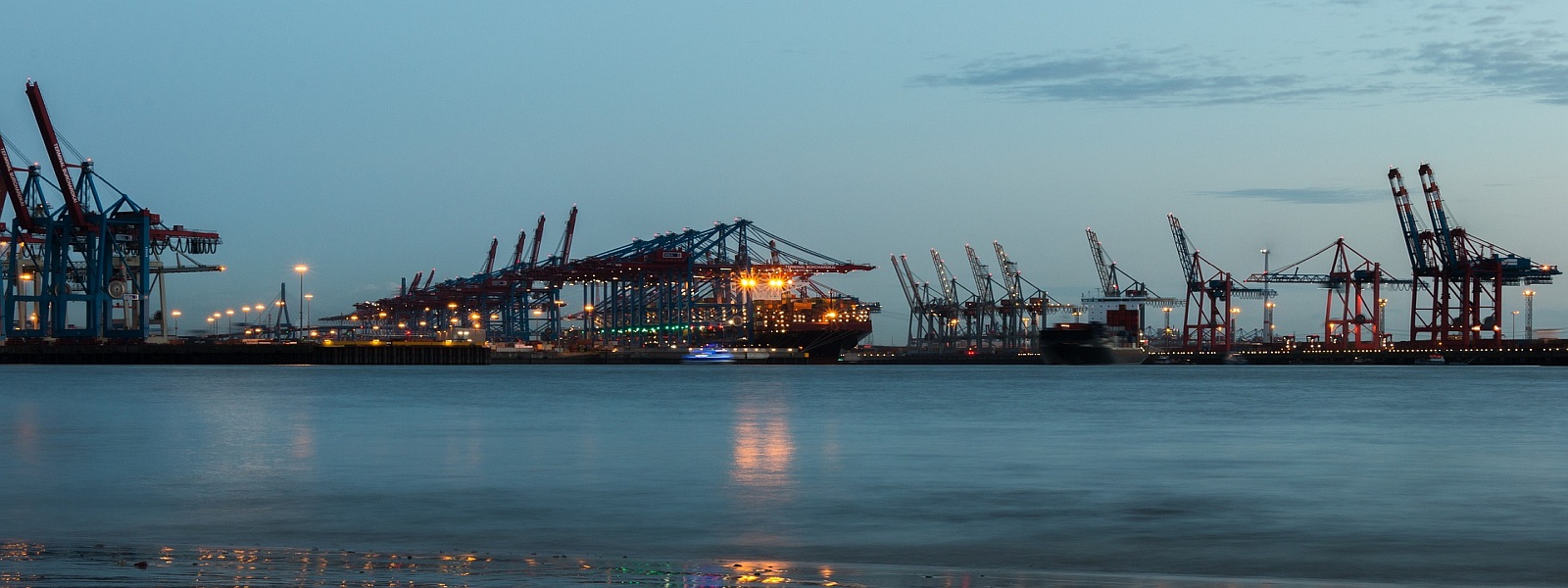
Managing Trade Balances
A country's trade balance can be managed with the same well-known sales strategies individual companies use for their products:
- Have a unique product that nobody else offers, but which others urgently need. This is the optimal situation for the seller. A prime example is rare earths, where China possesses approximately 90% of the world's refining capacity.
- Have a higher quality product or one with more features, that customers are willing and able to pay for. This e.g. was the selling point for German premium cars. For the producer this is an acceptable situation, but requires constant effort not to lose its competitive advantage.
- Have a me-too product, but offer it at a cheaper price than your competitors. This is by far the worst situation for the seller.
Unfortunately, most products today fall into the latter category. What to do if you want to increase exports for price-sensitive products:
- Increase productivity to reduce production cost e.g. by more automation or by lowering wages. The latter will only be accepted in extreme economic situations and rarely encouraged by governments. Thus companies often do this by moving production to lower wage countries. Governments can help by reducing taxes or relaxing regulations. Nothing to expect on a larger scale ...
- To avoid or at least delay the need for internal measures, a whole country may devalue its currency versus the currency of its customers. If the local currency becomes cheaper, the price from the perspective of the foreign customer will decrease, even if it remains unchanged on the local basis of the producing country. Unfortunately, if you devalue your currency to help your exports, your imports become more expensive. To get a net positive effect, the country should also reduce its imports. The technical term to actively pursue trade surpluses is mercantilism.
- Establish or increase tariffs and trade barriers on imports of competing products. Obviously this has no direct effect on your exports, but by making imports more expensive, people in your country are more likely to purchase local products. So local production goes up and may also create new jobs. Additionally, when total imports decrease, so does the need for exports. The technical term for such policies is protectionism. The Trump administration comes to mind ...
Special Role: USD as Global Reserve Currency
The 1970s saw the begin of three major developments in the global monetary system:
- As a result of the Vietnam war leading to large US government deficits, and two oil price shocks due to conflicts in the Middle East, an inflationary decade with steeply rising interest rates began. US president Nixon ended the USD's convertibility to gold and the more or less fixed exchange rates between the USD and other major currencies. Since then we have a FIAT money system, where currencies are not backed by gold or other commodities and thus can be created out of thin air by the government and their central banks.
- President Nixon also triggered a second important development. By opening diplomatic relations with China and encouraging western companies to do business with China, China's economic rise started. With its cheap labor China and other Asian Pacific countries became strong manufacturing centers first exporting simple consumer goods and then higher value industrial products. The FED finally stopped inflation by rising the short term interest rate (FED funds rate) to nearly 20% in 1980, but it was the cheap Chinese labor which drove the deflationary cycle with declining interest rates which lasted till the begin of the Covid crisis in 2020.
- A third outcome of US politics in the 1970s was the Petrodollar. The US convinced Saudi Arabia to sell oil only in USD. As compensation the US promised military protection to Saudi Arabia. Till today, not only oil but commodities worldwide and most other cross-border trades are settled in USD. This ensured USD's role as global reserve currency, which it had acquired as a result of WW2. Only in recent years, some countries are trying to move away from the USD system and try to settle trades in EUR or RMB. The military promise of the US was not restricted to the territory of Saudi Arabia, but was also meant for all sea lane over which oil (and other goods) are shipped, so this was and is a security net for global trade of all sorts and for all countries.
As the USD is the ultimate currency for trade and for other kinds of cross-border financing such as loans, all countries need to hold reserves in USD, no matter what their local currency is, when they want to buy commodities or other goods. To acquire these USD reserves, they try to run trade surpluses. As the global trade volume grows, to keep the system afloat, the US must permanently provide more dollars. At first glance this looks like a comfortable situation, because the US can import goods by exporting USD, which in a FIAT monetary system it can print without natural limits. However, there a two contradicting views:
- Cheap imports and an overvalued USD which makes its exports less competitive, may create problems for the US industry destroying jobs. This is the problem, the Trump administration tries to address with its MAGA (Make America Great Again) politics, which convinced many voters not only in the "rust belt", the former industrial heart of the US [5].
- The counter argument is that most of the "exported" dollars do not actually leave the US, because the exporting countries invest their dollars by purchasing US assets such as US treasuries and corporate bonds, by buying US stocks and companies or by buying real estate. Higher stock and real estate prices or higher bond prices (i.e. lower interest rates) increase the (perceived) wealth of US citizens who own the same investments. This view is held by many MAGA policy opponents [2]. They say, the risk of foreigners controlling US assets is limited, because in a conflict situation the US government can seize these assets any time. Reminds us to the situation of Russian assets in Europe since the begin of the Ukraine war. And may explain, why China and others started to buy more gold and less US treasuries.
No matter, which argument you follow, when a country has a deficit in its trade balance and thus in its current account, it must have a surplus in its capital & financial account, i.e. an influx of capital. This is a direct consequence of the fact, that the balance of payments, which is the sum of current account and capital account, must always be zero, as we discussed in our post Economic Basics.
Whether this influx of capital is good or bad from an economic perspective, depends on how it is used. If the capital flows into treasuries, i.e. government debt, it is negative, because governments tend to consume much more than they invest. If the capital however flows into stocks or companies as investments it helps the economy to grow and create jobs and thus is positive.
BTW: Capital inflows and trade deficits are not only a US topic. The EU, which also has an impressing trade deficit vs. China (see here), gets capital inflows with China investing in automakers such as Volvo , MG Rover or Mercedes-Benz, buying world-class automation and robot companies like Kuka or purchasing infrastructure like parts of the ports of Athens or Hamburg.
Related Posts:
References:
- AIER (American Institute for Economic Research): Understanding Trade Balances, Jan. 2025
- CFR (Council on Foreign Relations): The U.S. Trade Deficit, April 2025
- Lyn Alden: A Trade Breakdown, May 2025
- Lyn Alden: Why Trade Deficits matter, Oct. 2019
- Stephen Miran: A User's Guide to Restructuring the Global Trade System, Nov. 2024